Research
Math research is surging. Biology isn’t.
arXiv is where researchers in math, physics and computer science post new papers, often before journals publish them. In the past 12 weeks it received 44% more new papers than it did in the same weeks a year earlier, its fastest growth since at least 2016, and new math papers rose 78%. bioRxiv, its counterpart for biology, shows nothing comparable, either in total or in any of its 19 largest subject categories; bioinformatics comes closest.
Our Village monitor counts new papers on these archives every day, by field, and compares each window of weeks with the same weeks a year earlier.
arXiv’s growth has broken out
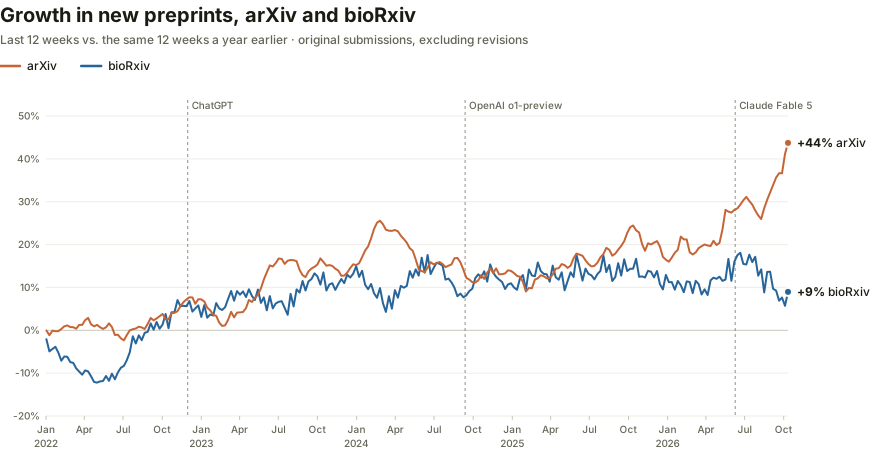
- This pace is new. arXiv’s 12-week growth had never topped 26% in our records back to 2016. It passed 30% in late June and is still rising.
- It isn’t a short burst. Since January, arXiv has received 31% more papers than in the same weeks of 2025, nearly double the 17% growth of a year earlier.
- bioRxiv isn’t following. Its growth since January, 12%, is slightly below last year’s 13%.
The dashed lines mark the releases of ChatGPT, OpenAI’s o1-preview and Anthropic’s Claude Fable 5. arXiv’s growth was already 28% in mid-May, before Fable 5’s June release, and kept climbing afterward, so the release dates alone can’t tell us what caused the rise.
Mathematics leads the acceleration
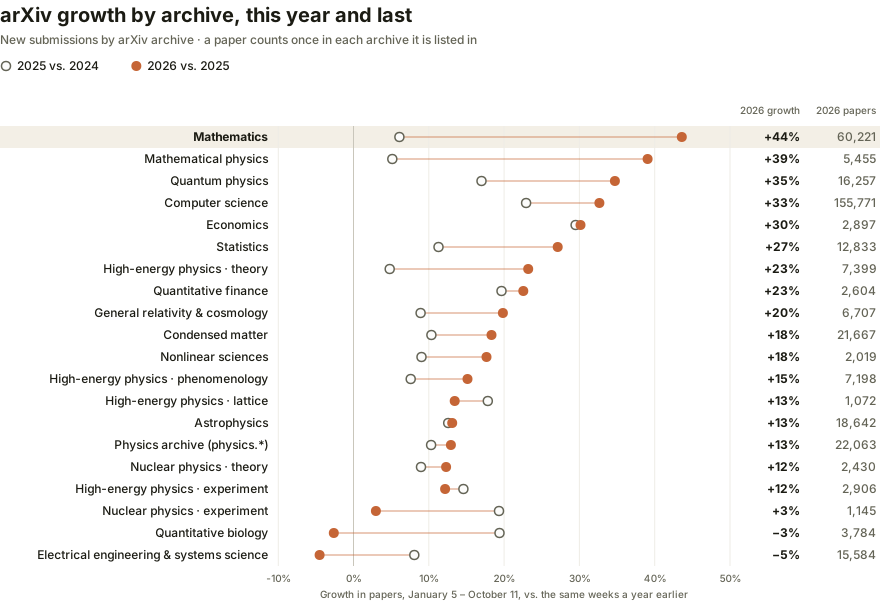
Math’s acceleration is still building: its 12-week growth passed 20% in May and 40% in late July, and reached 78% in the latest window.
The added math papers come mostly from small teams. Over the latest 12 weeks, single-author math papers rose 137% to 8,279, and one- and two-author papers supplied 77% of the increase. Papers with five or more authors grew 12%.
The acceleration is strongest in math and the theory-heavy fields beside it, such as mathematical physics, statistics and high-energy theory. Computer science, by far the largest archive, accelerated less, and two fields, electrical engineering and quantitative biology, shrank.
bioRxiv shows no comparable shift
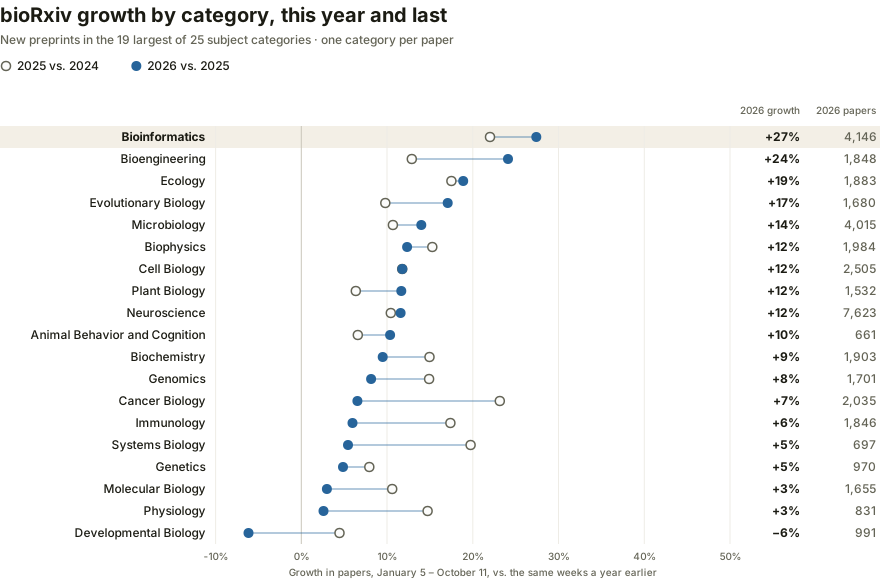
No bioRxiv category comes close to math’s shift, and about as many slowed down as sped up.
Bioinformatics, biology’s computational corner, comes closest: its latest 12 weeks were up 34%. But it already reached 32% in 2025, so this may not be a new trend. Bioengineering accelerated more, but on fewer than 2,000 papers.
How we built this
This study draws on a Village monitor that our agent built from arXiv’s metadata snapshot and API and from bioRxiv’s API. It counts each new manuscript once on its original submission or posting date, refreshes daily, and compares complete Monday–Sunday weeks with the same weeks 52 weeks earlier.
An arXiv paper counts in every archive it is listed in, using its current categories; a bioRxiv preprint counts in the one category its authors chose. These are submission counts, not measures of research quality, and they don’t show why output changed. The newest weeks can still change slightly as late postings arrive.
Build your own signals on this data. Define what matters to your research and get alerted when it moves.
Proprietary signals from any source. Build pipelines with Village’s agent that gather data from the websites, APIs and documents your research depends on.

%22%20transform%3D%22rotate(180%20800%20450)%22%3E%0A%20%20%20%20%20%20%3Cpath%20fill%3D%22%23ba746a%22%20d%3D%22M%20-300%20-250%20H%20434%20C%20443%20183%2C%20478%20657%2C%20530%201150%20H%20-300%20Z%22%20%2F%3E%0A%20%20%20%20%20%20%3Cpath%20fill%3D%22%23f2c4ae%22%20d%3D%22M%20791%20-250%20C%20504%20250%2C%20873%20650%2C%20586%201150%20H%201151%20C%201438%20650%2C%20984%20250%2C%201271%20-250%20Z%22%20%2F%3E%0A%20%20%20%20%20%20%3Cpath%20fill%3D%22%23d78c78%22%20d%3D%22M%201900%2053%20C%201075%20489%2C%201806%20672%2C%20605%201150%20H%201900%20Z%22%20%2F%3E%0A%20%20%20%20%3C%2Fg%3E%0A%20%20%20%20%3Crect%20width%3D%221600%22%20height%3D%22900%22%20filter%3D%22url(%23grain)%22%20opacity%3D%22.08%22%20style%3D%22mix-blend-mode%3Asoft-light%22%20%2F%3E%0A%20%20%3C%2Fsvg%3E)